

Hydroponic Lettuce Farming Business Plan in India: Cost & Profit
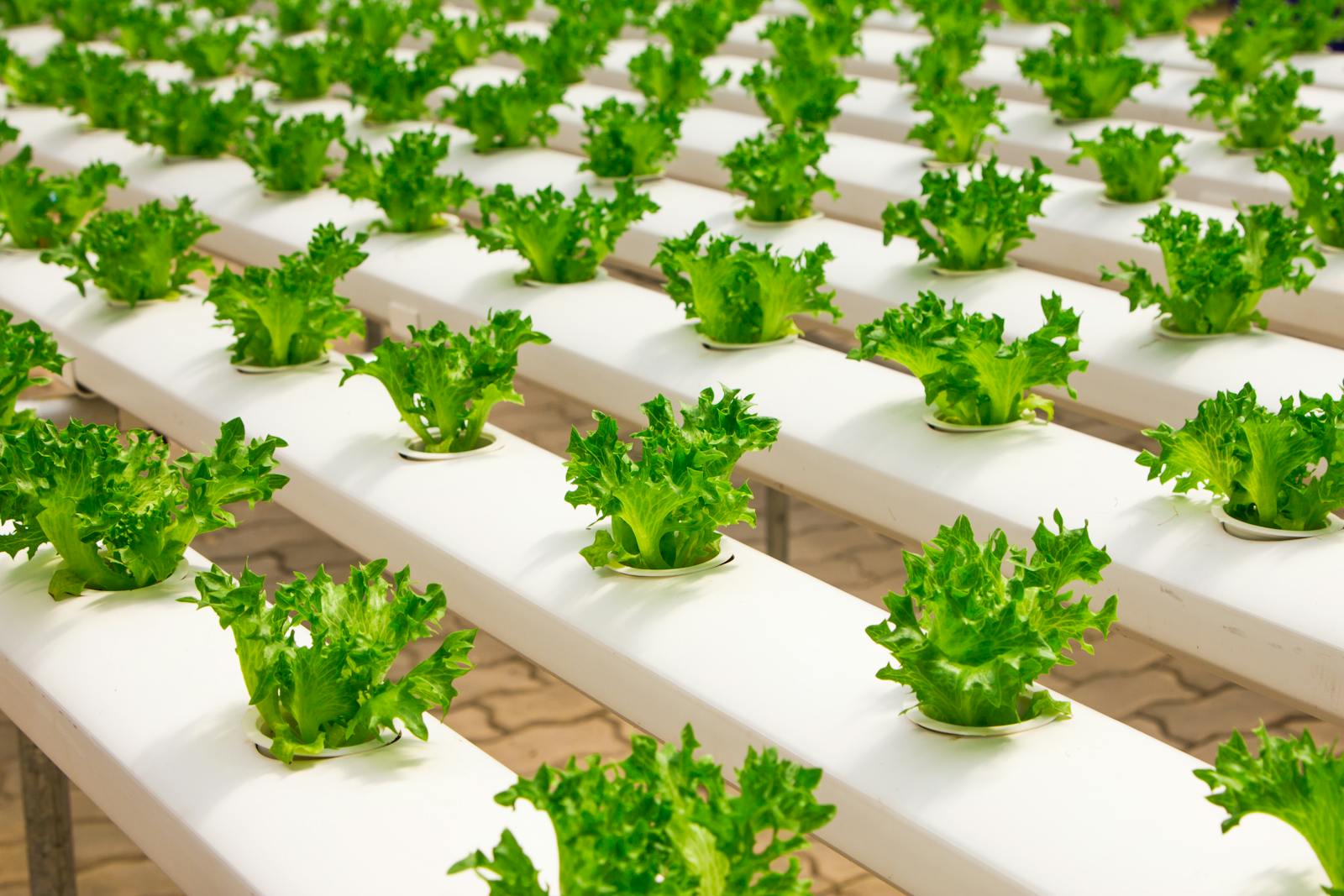
Lettuce is the single most common crop grown in Indian hydroponic farms today, and for good reason: it has a short crop cycle, strong demand from hotels, cloud kitchens and health-conscious households, and a price gap wide enough to make small setups profitable. This guide breaks down exactly what it costs to start a hydroponic lettuce farm in India, which system to pick, what you can realistically earn per week, and how to put together a business plan that a bank or investor would actually take seriously.
Why Lettuce Is the Easiest Hydroponic Crop to Start With
Lettuce grows well in both NFT (Nutrient Film Technique) and DWC (Deep Water Culture) systems, reaches harvest in 30 to 45 days, and sells for 3 to 4 times the price of regular market lettuce when grown pesticide-free and sold as a premium leafy green. That combination of a fast cycle and a high per-kg price is why most new hydroponic growers in India start here before moving to herbs or fruiting crops.
Unlike tomatoes or capsicum, which need 90 to 120 days before first harvest and more complex nutrient management, lettuce forgives small pH and EC (electrical conductivity) dosing mistakes while you're learning. It also needs less light, so a shade-net or basic polyhouse is often enough — no need to jump straight to an expensive climate-controlled glasshouse.
Hydroponic Lettuce Setup Cost in India
A basic hydroponic lettuce setup in India costs between Rs 4 lakh and Rs 15 lakh depending on the structure type and size, with the growing structure itself accounting for 40 to 60% of total cost. Smaller shade-net units at the lower end and climate-controlled glasshouses at the upper end bracket this range.
Here's how the numbers break down by structure type, on a per-square-foot basis:
- Shade-net structure: Rs 200–400 per sq ft — the cheapest way to start, suitable for lettuce in most Indian climates outside peak summer heat.
- Polyhouse / polyethylene tunnel: Rs 400–700 per sq ft — better temperature and pest control, the most common choice for serious small commercial growers.
- Climate-controlled glasshouse: Rs 1,200–2,000 per sq ft — needed only if you're targeting year-round, lab-grade consistency for export or premium hotel contracts.
Scaled up, total investment looks roughly like this:
- 500 sq ft: Rs 4–8 lakh (shade-net or entry-level polyhouse, DWC or media-bed system)
- 1,000–1,400 sq ft: Rs 8–15 lakh (basic polyhouse with NFT or DWC — the size most first-time growers choose)
- 2,000 sq ft: Rs 12–22 lakh (ventilated polyhouse, mixed-crop capable)
- 5,000 sq ft: Rs 28–50 lakh (fruiting-vegetable capable, usually a second-phase expansion, not a starting point)
Budget Rs 3,000–8,000 per month per 1,000 sq ft for nutrients on top of the setup cost, plus electricity for pumps and, if you're not using a shade-net structure, grow lights or climate control.
NFT vs DWC: Which System Suits Lettuce Better
Both NFT and DWC work well for lettuce, but NFT is the system most commercial Indian hydroponic lettuce farms actually use because it scales more easily and uses less water per plant. DWC is simpler and cheaper to build at a hobby scale but gets harder to manage once you're running more than a few hundred plants.
In NFT, a thin film of nutrient solution flows continuously through sloped channels past the plant roots — this is what one of India's larger hydroponic lettuce operations in Kerala uses across all 10 of its reservoirs, growing over 95% of its crops this way. DWC suspends plant roots directly in an aerated nutrient reservoir, which is easier to set up with basic plumbing but needs more careful oxygenation as it scales. For your first 500–1,000 sq ft unit, start with NFT — it's the more manageable choice once you're running dozens of channels instead of a few buckets.
How Much Lettuce You Can Realistically Grow Per Week
A well-run 1,400 sq ft NFT lettuce operation in India can produce 40 to 60 kg of harvestable greens per week, based on real production data from a Kerala-based commercial grower. That works out to roughly 15 kg per growing bed per cycle, with a 4 to 6 week crop cycle and staggered weekly harvests once the system is running continuously.
For a smaller 500–1,000 sq ft setup, you can scale this down proportionally — expect somewhere in the range of 15 to 40 kg per week once your system is fully staggered and producing every week rather than in one batch. Germination is quick (some lettuce varieties sprout in as little as 2 days), so the biggest variable in your weekly output is how well you stagger sowing across multiple beds rather than planting everything at once.
Selling Price: What Hydroponic Lettuce Actually Fetches
Hydroponic, pesticide-free lettuce sells for Rs 390–450 per kg in India when sold directly to consumers or premium buyers, compared to roughly Rs 100 per kg for regular imported or conventionally grown lettuce in the same markets. This 4x price premium is what makes relatively small hydroponic setups financially viable despite the upfront cost.
In practice, most growers split their output between two channels: direct-to-consumer sales (subscription boxes, farmers' markets, direct delivery) at the higher Rs 440–450 per kg end, and bulk sales to restaurants, hotels, and distributors at Rs 380–390 per kg. If you're selling 40–60 kg a week split roughly evenly between these two channels, that's approximately Rs 16,000–26,000 in weekly revenue before operating costs — useful as a planning benchmark, not a guarantee, since actual mix and prices vary by city and buyer relationships.
Your Step-by-Step Hydroponic Lettuce Business Plan
Here's a practical sequence for getting a hydroponic lettuce farm from idea to first sale in India:
- Pick your scale and system — start with 500–1,000 sq ft and an NFT setup unless you already have horticulture experience.
- Secure land or rooftop space — leased commercial/agricultural space, a rooftop, or a spare shed all work; you don't need farmland.
- Budget realistically — plan for Rs 8–15 lakh all-in for a 1,000 sq ft polyhouse NFT setup, plus 3 months of working capital for nutrients and labor.
- Register your business — a Udyam (MSME) registration unlocks priority-sector lending and scheme eligibility; it takes under 30 minutes online.
- Apply for infrastructure financing — the government's Agriculture Infrastructure Fund offers subsidized loans for exactly this kind of post-harvest and farm infrastructure.
- Line up buyers before harvest — approach 3–5 hotels, cloud kitchens, or premium grocers in your city while your first crop cycle is still growing, not after.
- Start with one crop, one system — resist the urge to grow five crops in your first cycle; perfect lettuce first, then diversify into herbs.
Profit and Breakeven Timeline
A 500 sq ft leafy-green hydroponic setup in India typically breaks even in 18 to 24 months, assuming consistent weekly harvests and a buyer base in place early on. Larger, mixed-crop operations take longer — 24 to 36 months for 2,000 sq ft setups — since the extra investment takes time to fully utilize.
Your real margin comes from the gap between your Rs 3,000–8,000 monthly nutrient cost (per 1,000 sq ft, plus labor and electricity) against weekly revenue of Rs 16,000–26,000 at a 1,000–1,400 sq ft scale. Keep your books from week one — buyers and lenders will want real sales and cost records, not projections.
Government Schemes That Help Hydroponic Lettuce Growers
The Agriculture Infrastructure Fund (AIF) is the most relevant scheme for hydroponic lettuce farmers, offering interest subvention and credit guarantee support on loans for farm infrastructure like polyhouses and climate-controlled growing systems — one Kerala grower used a Rs 16 lakh AIF-linked loan with a 30% subsidy component to build a 1,400 sq ft NFT facility. Udyam (MSME) registration is a prerequisite for most of these benefits and also opens doors to PMEGP and Mudra loan options if your hydroponic venture is structured as a small manufacturing or service enterprise rather than pure agriculture.
Check current eligibility and application details on the official Agriculture Infrastructure Fund scheme page before applying, since subsidy percentages and caps are revised periodically. You can complete your business registration directly through the official Udyam registration portal.
Common Mistakes First-Time Lettuce Growers Make
The most expensive mistake is oversizing your first setup before locking in buyers — many growers build 2,000+ sq ft facilities and then struggle to sell consistent weekly volume. Start smaller, prove out sales for 2–3 months, then expand.
The second common issue is treating pH and EC monitoring as optional. Lettuce is forgiving compared to fruiting crops, but inconsistent nutrient dosing still shows up as tip-burn and uneven heads that buyers reject. A cheap EC/pH meter and a daily five-minute check routine prevents most of this. Before settling on a crop mix, it's also worth comparing lettuce against other options in our guide on the best crops to grow in hydroponics for profit in India.
Frequently Asked Questions
How much does it cost to start a hydroponic lettuce farm in India?
A basic 500–1,000 sq ft hydroponic lettuce setup costs Rs 4–15 lakh in India, depending on whether you use a shade-net structure or a polyhouse, and whether you choose NFT or DWC. The growing structure itself typically makes up 40–60% of this total cost.
Which hydroponic system is best for growing lettuce, NFT or DWC?
NFT (Nutrient Film Technique) is generally better for commercial-scale lettuce farming in India because it scales more easily and uses less water. DWC (Deep Water Culture) is simpler and cheaper for small, hobby-scale setups but becomes harder to manage as plant count grows.
How much lettuce can I grow per week in a small hydroponic setup?
A 1,000–1,400 sq ft NFT setup can produce roughly 40–60 kg of lettuce per week once fully staggered, based on real Indian farm data. A smaller 500 sq ft setup typically yields 15–40 kg per week depending on staggering and crop cycle length.
What price can I sell hydroponic lettuce for in India?
Hydroponic, pesticide-free lettuce sells for Rs 390–450 per kg in India — roughly four times the price of regular conventionally grown lettuce, which sells around Rs 100 per kg. Direct-to-consumer sales command the higher end of that range.
Are there government subsidies for hydroponic lettuce farming in India?
Yes. The Agriculture Infrastructure Fund (AIF) offers interest subvention and credit guarantee support for farm infrastructure like polyhouses and hydroponic systems, and Udyam (MSME) registration opens up further scheme eligibility including PMEGP and Mudra loan options.
Want the complete playbook — covering system selection, nutrient schedules, buyer outreach scripts, and financial projections for your hydroponics venture? Our Hydroponics Farming Business guide walks through the entire setup process step by step, so you're not piecing it together from scattered sources. It pairs well with our broader Hydroponic Farming Business in India: Cost & Profit Guide if you want the full-category view before committing to lettuce specifically.